We Are a Company Like These Other Companies: Logo Wall Satire
Why is this Marketing meme funny?
Level 1: Same Shirt, Same Team
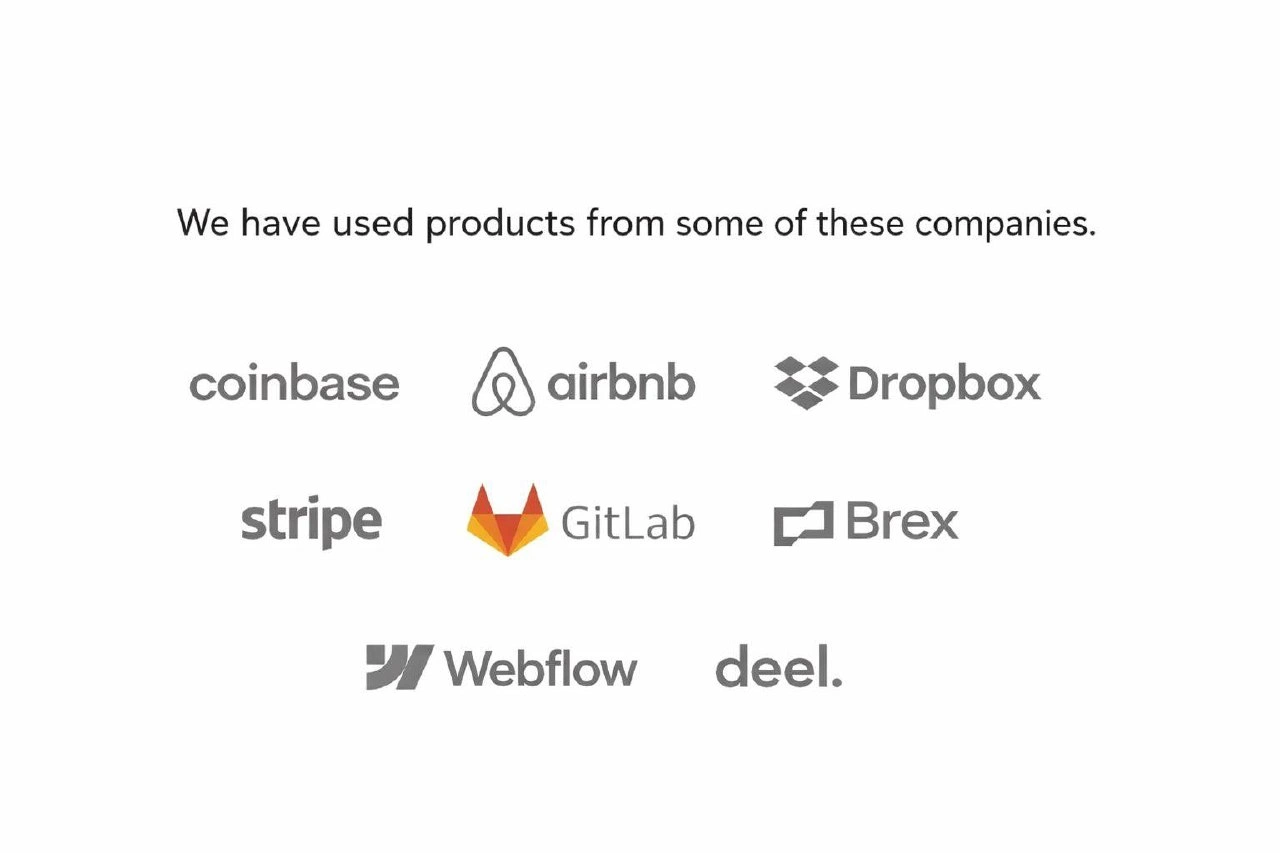
It's like a kid pointing at a poster of famous soccer players and announcing, "I'm an athlete like these other athletes — we both own shoes." Nothing said is false; it's just so empty it's hilarious. The picture copies exactly how companies brag on their websites — fancy famous logos, polite gray colors — but swaps the brag for the most obvious statement possible. The laugh comes from realizing the real bragging usually isn't saying much more than this; it just hides it better.
Level 2: How the Logo Wall Works on You
A few building blocks. Social proof is the psychological shortcut where we judge quality by who else appears to approve — the engine behind reviews, follower counts, and this layout. A logo wall (or "logo cloud") is the standard landing-page section displaying recognizable customer brands, almost always in gray so they look uniform and tasteful. Brand association is the transfer trick: place your product next to Stripe's wordmark often enough and visitors subconsciously assign you Stripe-grade reliability. In practice, the bar for putting a logo on the wall can be astonishingly low — one employee on a free tier, an expired pilot, sometimes nothing at all until a cease-and-desist arrives. When you build your first marketing site, you'll find component libraries that ship this section pre-made with placeholder logos, which tells you how mandatory the pattern has become. The companies pictured are simply the prestige defaults: payments (Stripe), code hosting (GitLab), file sync (Dropbox), travel (Airbnb), crypto (Coinbase), corporate finance (Brex), no-code sites (Webflow), and global payroll (Deel). The meme keeps the costume and removes the lie — and the costume almost works anyway.
Level 3: A Tautology With a Design System
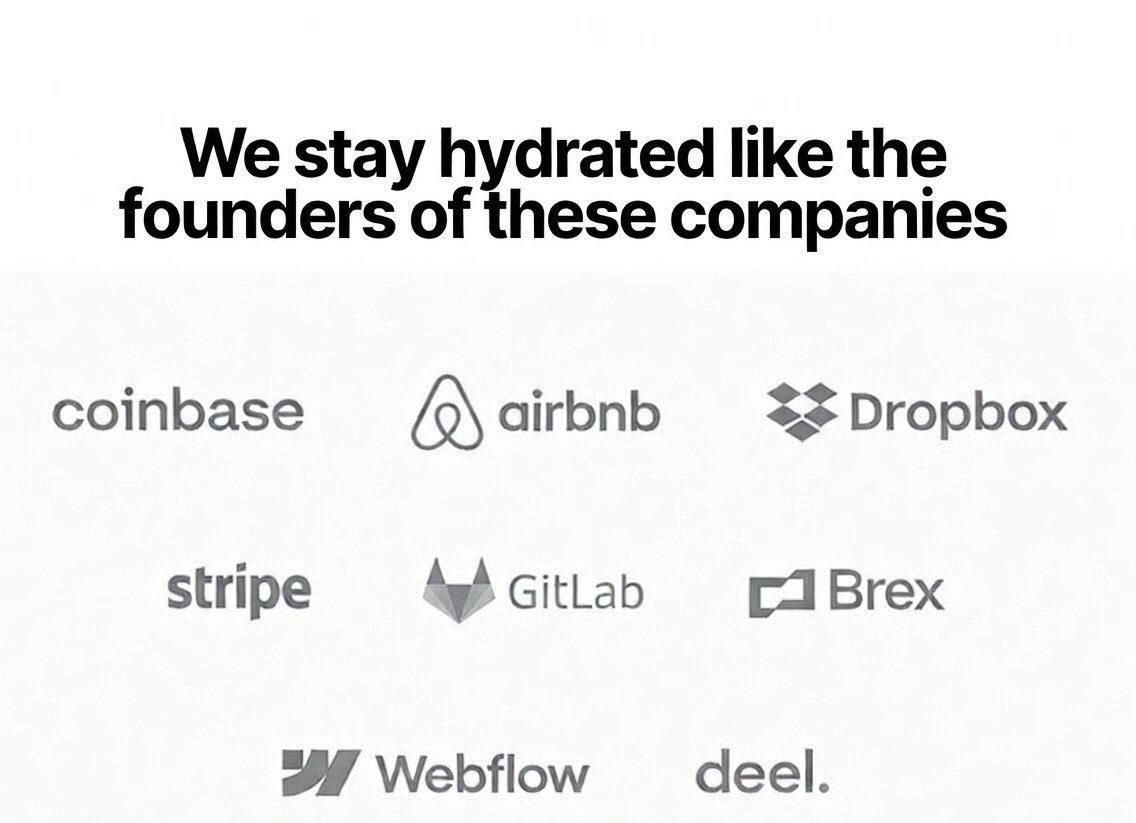
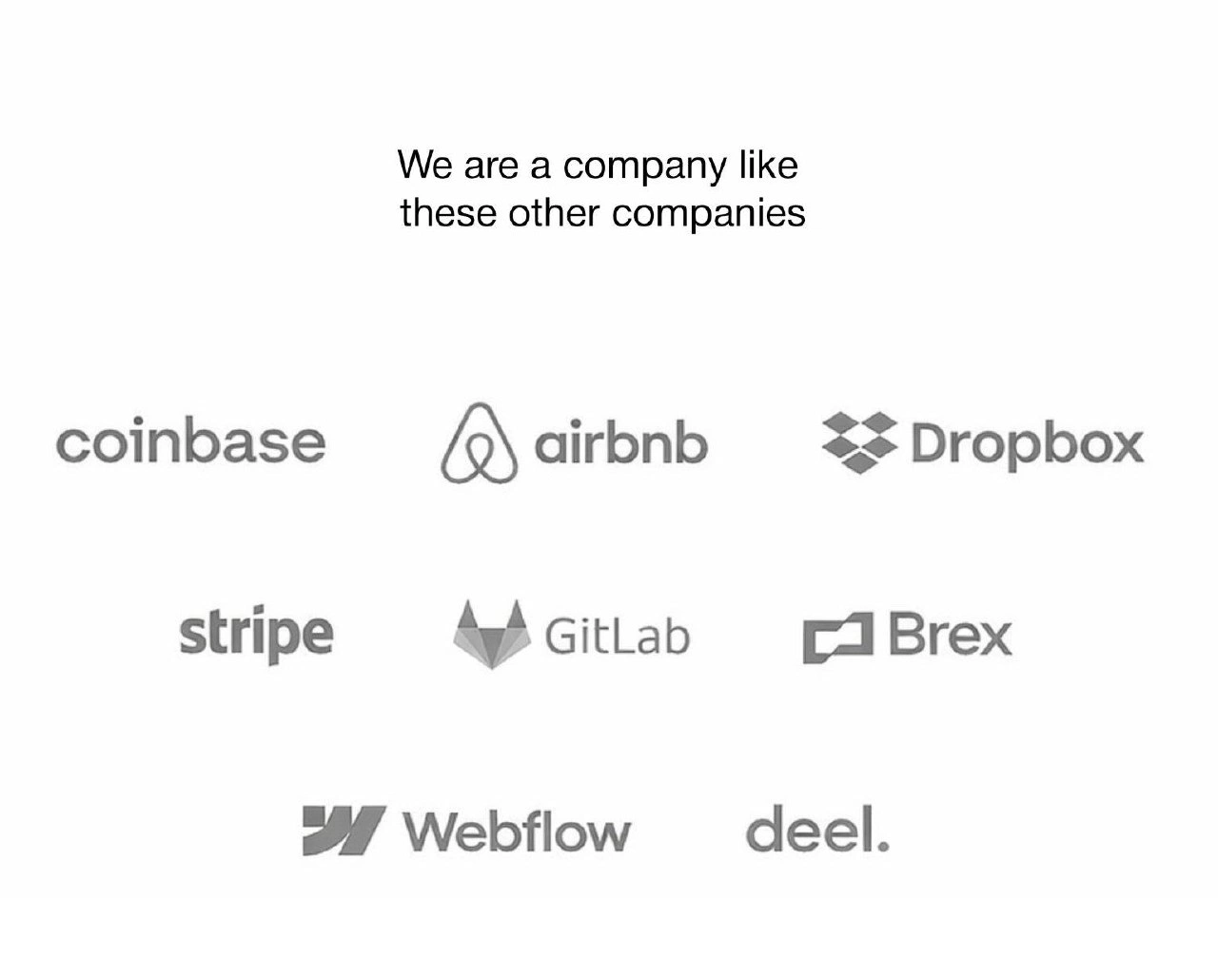
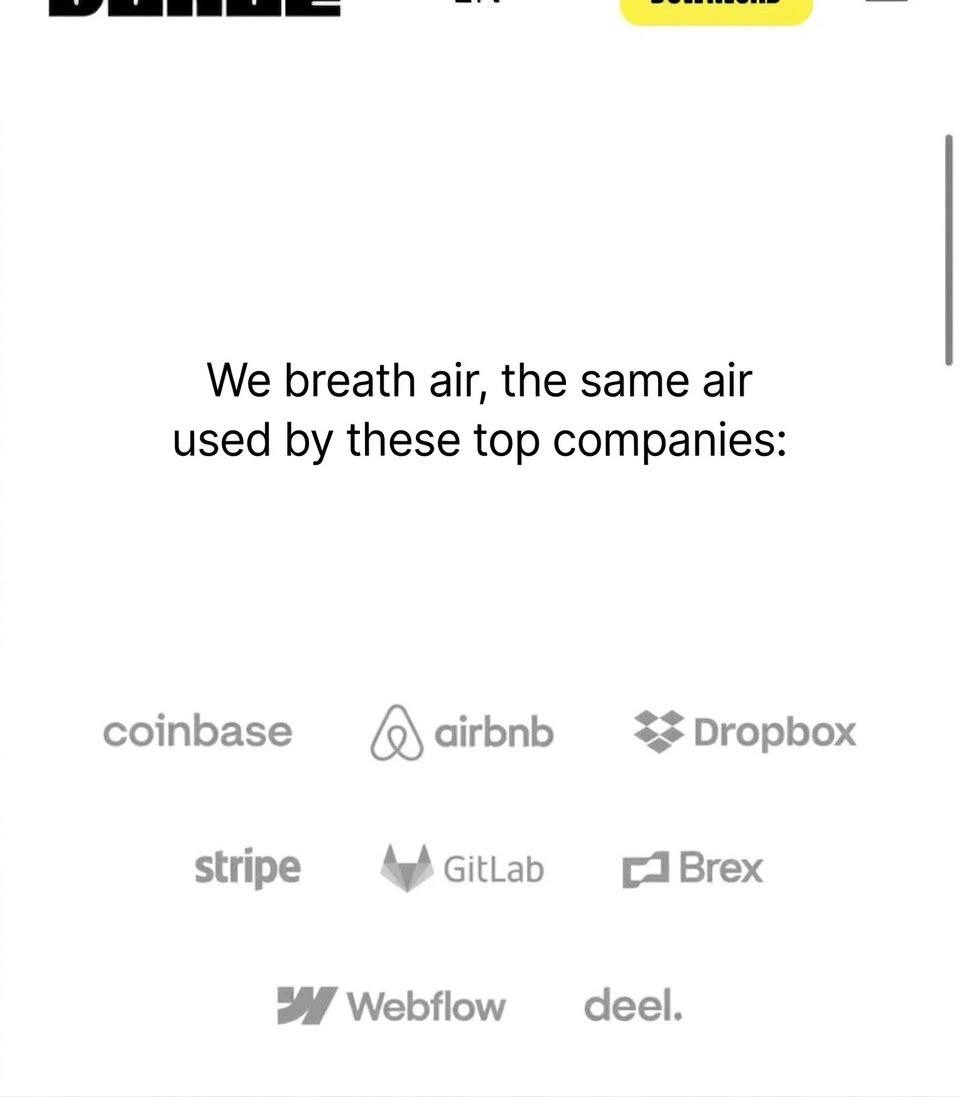
White background, generous negative space, centered headline, three rows of carefully desaturated logos — coinbase, airbnb, Dropbox, stripe, GitLab, Brex, Webflow, deel. — everything about this slide is indistinguishable from a real SaaS landing page section, except the copy:
"We are a company like these other companies"
That sentence is the "trusted by" pattern compiled down to its actual semantic payload. Real logo walls launder credibility through ambiguity: "trusted by teams at," "powering," "used by" — verbs selected by growth marketers precisely because they assert association without asserting anything falsifiable. Strip the ambiguity and what survives legal review is exactly this: both parties are incorporated entities. It's the marketing equivalent of a function that takes eight famous dependencies and returns true. The satire bites because the visual grammar is doing all the persuasion — gray logos read as endorsement at a glance regardless of the words above them. Most visitors never parse the sentence; they pattern-match the layout, feel reassured, and scroll on. The meme weaponizes that by making the text honest and betting (correctly) that the slide still feels legitimate.
There's a sharper industry observation underneath. The chosen brands — Stripe, GitLab, Webflow, Brex, Deel, Coinbase, Airbnb, Dropbox — aren't random; they're the design-Twitter canon, the companies whose landing pages every seed-stage startup clones along with their pricing-page layout and their tone of voice. So "we are a company like these other companies" is accidentally the most truthful positioning statement in startups: half the ecosystem's differentiation strategy is, literally, being a company like those other companies. Conformity sold as credibility, credibility sold as differentiation — a dependency cycle no linter will ever flag.
Description
A minimalist white parody slide with centered black text reading 'We are a company like these other companies' above a grayscale logo wall in three rows: coinbase, airbnb, Dropbox; stripe, GitLab, Brex; Webflow and deel. It lampoons the 'trusted by' social-proof section on SaaS landing pages, reducing the implied association with famous brands to its emptiest possible claim - merely also being a company
Comments
1Comment deleted
The logo wall passed legal review for once: 'is a company' is the only claim about these vendors that survives due diligence