
Ancient Relic: The VGA Port
Description
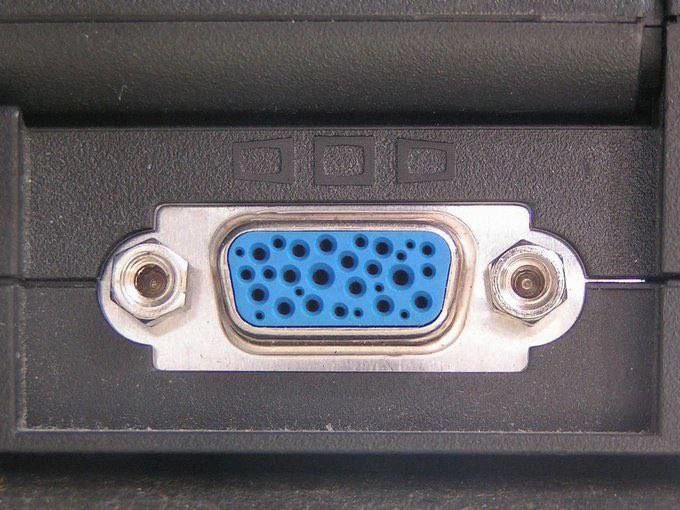
This is a close-up, high-resolution photograph of a standard 15-pin VGA (Video Graphics Array) port, mounted on a piece of black, textured electronic equipment. The port's connector is bright blue and features a trapezoidal shape with three rows of pinholes. It is flanked by two hexagonal, silver-colored screw-in sockets used to secure the cable. The image evokes a sense of nostalgia for older technology. For experienced developers, this isn't just a port; it's a throwback to an era before digital video interfaces like HDMI and DisplayPort became standard. It brings back memories of troubleshooting analog signal issues, dealing with bent pins, and the distinct satisfaction of physically securing a display cable. The image's humor lies in its representation of now-obsolete but once-ubiquitous technology


Comments
29Comment deleted
The VGA port: where you learned that the solution to a flickering screen wasn't a software patch, but tightening a screw just a little bit more
Spotting a VGA port on a brand-new server is like finding a CORBA stub in your microservice repo: proof that ‘temporary backwards compatibility’ outlives entire engineering teams
After 20 years in tech, I've learned that VGA ports are like COBOL - everyone says they're dead, yet somehow they're still running critical infrastructure and showing up in every conference room where you desperately need to present your microservices architecture deck
Ah yes, the VGA port - where 'plug and pray' was the actual connection protocol, and you'd tighten those thumbscrews like you were securing the nuclear codes, only to realize you had it upside down. This analog relic reminds us of an era when 'display driver issues' meant physically jiggling the cable, and 1024x768 at 60Hz was considered 'high resolution.' Now it sits there like a museum piece, silently judging your 4K DisplayPort setup while enterprise KVM switches everywhere weep for its simplicity
It’s the hardware equivalent of an “open” API: lots of endpoints, none align with the spec
Enterprise backward compatibility in hardware: a VGA port where we just kept drilling holes until every legacy adapter fit - basically our API, but with screws
VGA on a 2024 server: because nothing screams 'mission-critical' like negotiating ghosting artifacts during a 3AM outage
bruh Comment deleted
Bruh Comment deleted
Look again on it Comment deleted
bruh Comment deleted
Ok, more points then usual, but it’s not funny Comment deleted
There are 3 display icons above this connector, so this might be some new VGA HD (for "high density") connector, sharing the same DE form factor as the original "high density" HD-15 video port. Comment deleted
auer Comment deleted
Someone told me where his sense of humor lies? Comment deleted
My profile pic for years Comment deleted
I shouldn't stick it in... on the other hand- Comment deleted
Omg, my τριποφοβία is getting high Comment deleted
what do you mean by tripophobia? Comment deleted
phobia of big amount of holes Comment deleted
one man's phobia is another man's fetish Comment deleted
https://red.artemislena.eu/r/submechanophobia - there is just something satisfying about sunken machines especially when technology is being particularly nasty although it's probably not that great for the environment Comment deleted
subnautica was the best game ever Comment deleted
Is this AI or has something eaten it? Comment deleted
My gosh so repulsive Comment deleted
Holes sometimes might not be specifically terrifying, but unpleasant sight for anyone indeed Comment deleted
Just google images "tripophobia" and understand Comment deleted
bubbles,,, Comment deleted
I'd say it's little short of being qualified to be called "phobia", rather it's an instinctive brain reaction to disturbance. No one really gets scared of things riddled with holes, there's countless natural and artificial things like that. What actually confuses your brain is a representation of this "phobia" on humans, you feel something very wrong and in confusion can't understand what, so the closest feeling that your brain chooses is either fear towards something that inflicted such "horrible" condition or disgust of how it looks like. So to make you specifically afraid of seen pictures, their authors usually add little something inside holes to make your imagination run wild thinking how it becomes like that. By the way as a child I once fell into a pile of little stones for asphalt and my friend fell on me, so one of my elbows got a bunch of wounds, some of them went deep and I have about 11 little scars left.🗿 Comment deleted