The Router That Survived Everything
Why is this Hardware meme funny?
Level 1: The Box Needs Sleep
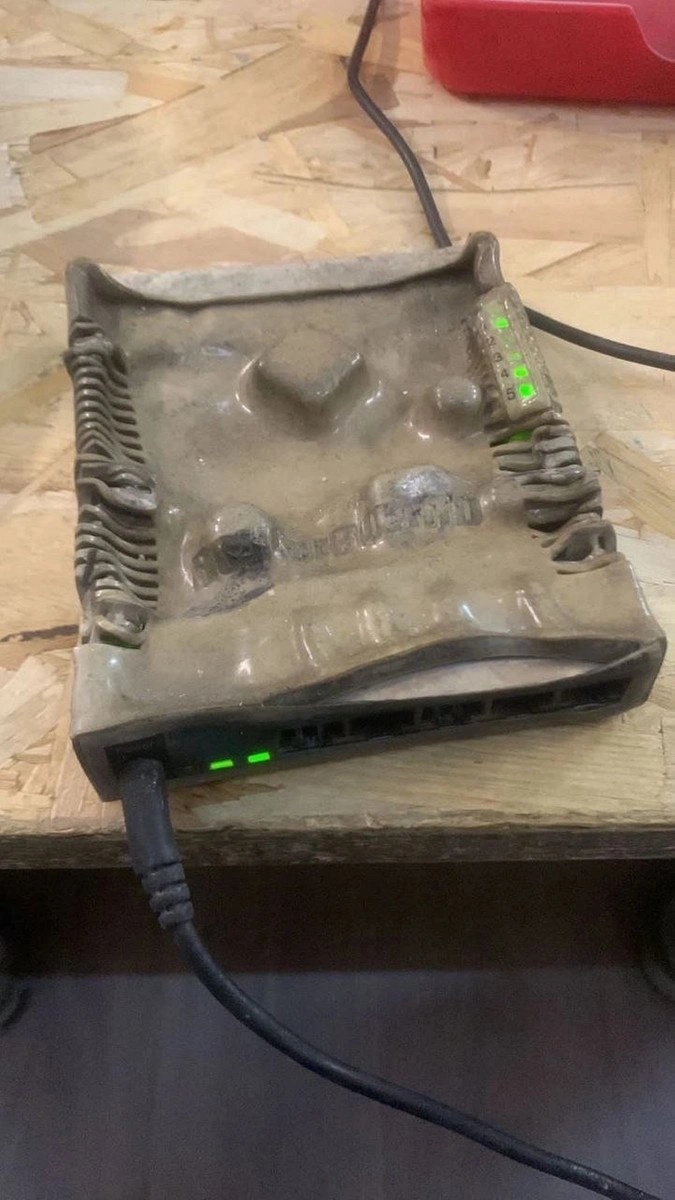
This is like seeing a tired old worker covered in dirt, barely standing up, but still holding the door open for everyone else. People laugh because the little box looks like it should be resting, yet the green lights show it is still doing its job. The joke is that computers, networks, and people can all look completely worn out while everyone keeps saying, "Great, it still works."
Level 2: Green Means Maybe
A router moves network traffic between different networks. A switch moves traffic inside one network. Small office boxes often combine routing, switching, firewalling, Wi-Fi, and a web admin panel into one plastic unit. The row of ports on the front and the cables in the photo suggest this is some kind of network box, and the green lights mean at least some interfaces still have power or active links.
The meme belongs naturally to Hardware, Networking, Infrastructure, and SysadminLife because it shows the side of software that beginners do not always picture. Code runs somewhere. Deployments depend on DNS, cables, routers, switches, power supplies, and the person who remembers which dusty box connects which room. When you are new, "the server is down" sounds like a software problem. After enough incidents, you learn it can also mean someone moved a cable, a fan clogged with dust, or a device older than your onboarding document finally gave up.
The dust matters because heat is one of hardware's quiet enemies. Electronics need airflow. Vents full of grime can make a device run hotter, and heat shortens component life. The joke is not just that the router is dirty; it is that it looks physically exhausted while still performing its duty. The post's burnout comparison lands because early-career developers often learn the same painful lesson about systems and teams: "working" is not the same as "sustainable."
Level 3: Load-Bearing Dust
The image is funny because the device looks absolutely finished, while the network indicators insist it is still doing business. A small router or network appliance sits on a plywood workbench, caked in gray-brown grime so thick that the molded plastic top reads like a skull face. Yet the green LEDs are lit on the front and side, and a black cable is plugged in. In sysadmin terms, those link lights are the whole punchline: if packets are still flowing, somebody will be tempted to call the situation "stable."
The post text, "PoV: Burnt out though still refusing to take vacation", turns the hardware into a burnt-out engineer. That works because infrastructure often gets treated the same way exhausted people do in unhealthy organizations: as long as output continues, nobody asks what condition the machine is in. The router is not literally burnt; it is buried under dust, heat, neglect, and probably years of "we will replace it next quarter." That is the visual equivalent of a production dependency that has survived so long it has become part of the building's folklore.
Experienced operators recognize the dangerous comfort here. Network hardware can keep running for years with no reboot, no firmware update, no documentation, no spare unit, and no obvious owner. The real risk is not that the box is ugly. The risk is that everyone has silently accepted an unknown single point of failure. Maybe it handles a small office subnet. Maybe it bridges some forgotten camera system. Maybe it is the reason payroll still reaches the printer in the warehouse. Nobody knows, because discovering the truth would require unplugging something, and that is how a quiet afternoon becomes an incident review.
The skull-like shape on top adds a nice bit of accidental infrastructure horror. It looks dead, but the LEDs say alive. That is the contradiction behind a lot of legacy infrastructure: operational does not mean healthy. The device may still route traffic, but its support contract, firmware, replacement parts, and institutional memory may all be gone. This is the physical version of a cron job named final_final_backup2.sh that everyone fears deleting because the last person who understood it left before the ticketing system migration.
Description
A portrait photo shows a small router or network box on a plywood workbench, completely coated in gray-brown dust and grime. Green status LEDs are still lit on the front and side panels, with black cables plugged into the device, while the dirt and molded casing make the top look like an angry skull-like face. There is no visible text in the image. The joke is the familiar sysadmin reality that some horrifying, forgotten piece of physical infrastructure can remain load-bearing for years as long as the link lights stay green.
Comments
7Comment deleted
Uptime is easy when the hardware has become load-bearing sediment.
"I hope meatbags will fix me after that" Comment deleted
"Just a bit overvoltage and I'm ok." Comment deleted
That's what developers who moved to Cyprus in 2022 feel now Comment deleted
No condolences Comment deleted
was that a switch? Comment deleted
the device in picture is doing nothing, cause there is no ethernet cable conected to it, it is a Mikrotik, probably a RB951Ui-2HnD or a RB951G-2HnD Comment deleted