Skip to content
DevMeme
6096 of 7435
The Pain of Modernizing the Wrong Legacy System
TechHistory Post #6676, on Apr 22, 2025 in TG

The Pain of Modernizing the Wrong Legacy System

Why is this TechHistory meme funny?

Level 1: The Wrong Gift

Imagine your dad really wanted you to fix his old, favorite toy – let’s say a vintage train set from when he was young. You, trying to make him proud, instead spend time fixing a slightly newer toy train that you think is also important. You clean it up, add fresh paint, and bring it to him saying, “Look, I fixed this train for you!” But Dad frowns and says, “Your older brother would have repaired the really old train set that I actually wanted fixed.” Ouch. In simple terms, you worked hard to give someone something you thought they'd like, but it wasn’t what they really asked for – and then they compared you to someone else who isn’t even around. That feeling of doing a lot of work and still disappointing the person – that’s the heart of this joke. It’s funny in a facepalm kind of way, because we can all imagine being in that spot, and it stings even though we laugh about it.

Level 2: Remaster vs Rewrite

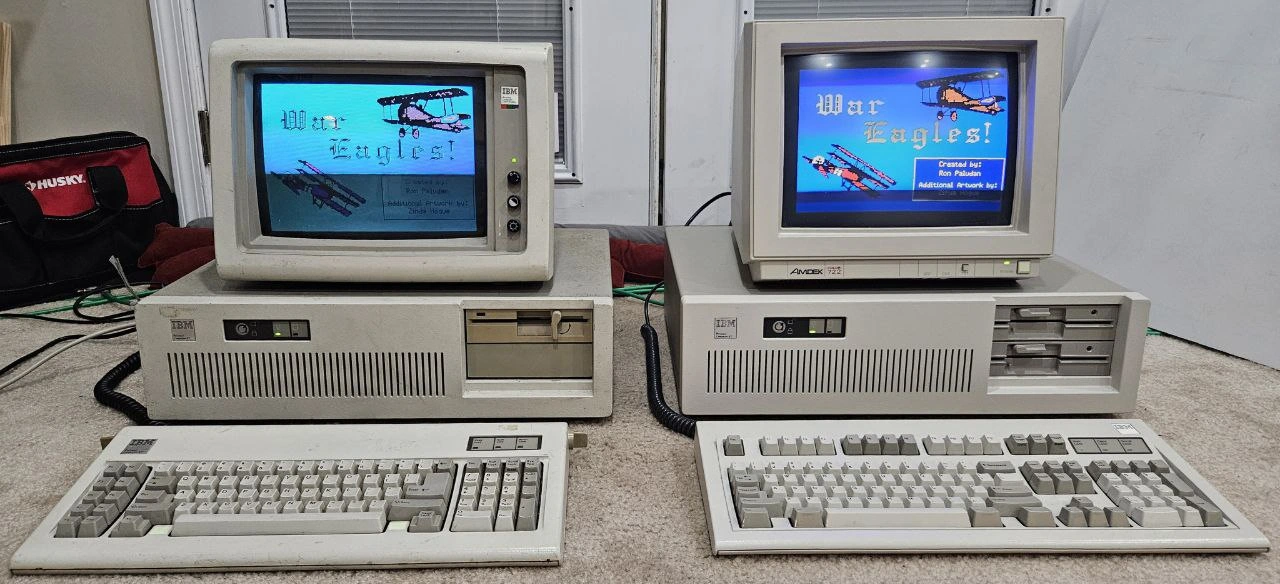
This meme uses a scene from The Lord of the Rings movies and references two classic Bethesda games to illustrate a software development irony. Let’s break it down in simpler terms. Faramir, the character in the top panel, represents a developer or an engineering team. He’s showing his father (Denethor, who represents the stakeholder or manager) that he’s accomplished something: he’s brought “Oblivion Remastered.” Oblivion is a video game (The Elder Scrolls IV: Oblivion, released in 2006), and a “remastered” version means the same fundamental game, but updated – usually with better graphics or minor improvements. In a development analogy, that’s like taking an old software application and updating its interface or optimizing it a bit, without rewriting it completely. It’s an upgrade of something old to make it look or run better on modern systems.

Denethor’s reply – “Boromir would have brought me Morrowind Remastered” – is the punchline. Morrowind is an even older game in the same series (The Elder Scrolls III: Morrowind, from 2002). So the dad (stakeholder) basically says, “You gave me the wrong upgrade. You updated the newer thing, but I wanted the older thing updated.” He also name-drops Boromir (Faramir’s older brother in the story) to rub it in. In the movie, Denethor always compared Faramir to the favored brother Boromir, saying Boromir would have done better. In the workplace, this is like a boss saying, “The other team or the previous engineer would have achieved the real goal I wanted.” It’s an exaggeration of stakeholder disappointment: the boss isn’t impressed with the work done because it’s not the specific thing he had imagined. That’s why the meme falls under TechHumor and RelatableDevExperience – many developers have experienced finishing a project and then the stakeholder goes, “Hmm, that’s nice, but actually I was expecting something else entirely.” Ouch!

Now, why use Morrowind Remastered vs Oblivion Remastered? These games act as metaphors for software systems of different ages. A system from 2002 (like Morrowind) is truly legacy tech – think of a program written in an old language or for Windows XP. A system from 2006 (Oblivion) is also old, but not as ancient – maybe it’s written in a slightly more modern language or has slightly better architecture. Legacy systems refer to older software that a company still uses (legacy means it’s inherited from the past). Modernization means updating those systems to use current technology (for example, upgrading the database, moving it to the cloud, or rebuilding parts of it so it’s easier to maintain).

In a perfect world, stakeholders and developers would agree on which legacy system to modernize first, but in reality, priorities get mixed up. Perhaps the stakeholder (like Denethor) really cares about a core system that’s very old (Morrowind = the 2002 system) – maybe because it’s critical to business or it’s beloved by users – and he assumed the team would work on that. The engineering team, however, might have chosen a different starting point: maybe the 2006 system (Oblivion) was easier to tackle or had more readily achievable improvements, so they went for a quick win by “remastering” that one. This difference is akin to upgrade_vs_remaster confusion: did the boss want a full remake of the oldest system (like rebuilding everything from scratch – a huge project), or just some improvements on an already somewhat modern one? Here, the boss clearly expected the former, while the team delivered the latter.

Let’s also explain “remaster” vs “remake” in software terms, since that’s key to understanding the humor. In the gaming world, a remaster takes an old game and improves it (higher resolution graphics, maybe some bug fixes) but it’s fundamentally the same game. A remake, on the other hand, re-builds the game from the ground up (new engine, possibly new code and features) to recreate the old game in a modern way. In software development, a rough equivalent would be:

  • Refactoring (remastering) – You take existing code and improve it without changing what it does. For example, you might clean up the code, optimize it, or update the UI, but the core functionality and design stay the same.
  • Rewriting (remaking) – You throw out or heavily redesign the old code and write a new system that does the same job, possibly with new technology or architecture. This is much more expensive and risky, but can be necessary if the old system is too outdated.

When Denethor says he wanted Morrowind Remastered, he’s essentially saying he wanted the team to focus on the older system – implying possibly a full overhaul of that major legacy application from 2002. Instead, Faramir giving him Oblivion Remastered means the team updated a later-generation system (from 2006) – a nice-to-have, perhaps, but not the thing the boss was fixated on. It’s like your team repainted and fixed some newer machinery in the factory, but the CEO was expecting you to retrofit the 1970s clunker that’s critical to production. The CEO then says, “Our old expert would have done the big one I wanted.” That hurts, right?

For a junior developer or someone new to these dynamics, a few key terms from the meme context:

  • Stakeholder: This is anyone who has a stake in what you’re building – often a manager, client, or executive who requested the project. They set expectations and care about the outcome. Here, Denethor is the stakeholder.
  • Legacy Codebase/Legacy Software: Software that was written a long time ago and is still in use. It often means it’s outdated or built on old technology, but the business still relies on it. Morrowind (2002 game) symbolizes a very old legacy system. Oblivion (2006 game) symbolizes a slightly newer, but still legacy, system.
  • Modernization: The process of updating legacy systems. This can range from small tweaks (refactoring code, updating libraries) to big projects (migrating an old system to a new platform, or complete rewrite). It’s like renovating an old house – sometimes you just repaint (small update), other times you have to redo the plumbing and wiring (major overhaul).
  • Refactor: To improve the internal code without changing what the program does – like tidying up. Refactoring an old system might involve cleaning code structure or improving efficiency while keeping features the same.
  • Rewrite: To start over and build the system anew, using modern tools or languages. It’s riskier, because you have to reimplement all features from scratch, but it can free you from limitations of the old system.

The meme is funny to developers because it hyperbolically shows a scenario they dread: you finish some hard work on old tech, and instead of praise, you get criticized for not doing a different old tech project. It highlights how crucial it is to manage expectations. The engineer (like Faramir) thought he was doing something great by delivering that LegacySoftware update. But the manager (like Denethor) had a different vision of success. The gamingReference to Elder Scrolls games just makes it nerdy and fun: a lot of developers grew up on those games, so they immediately get the timeline joke (2002 vs 2006) and the idea of “remastering” an old product. And the use of Lord of the Rings characters adds the drama of a familial dispute, symbolizing the workplace conflict. By combining these, the meme communicates: “In tech, sometimes your heroic effort on an older project isn’t appreciated, because it wasn’t the ‘right’ older project.” It’s an easy-to-understand scenario once you know who the characters and games represent, and that’s why it resonates as tech humor. Everyone from a junior dev to a senior architect has seen a smaller upgrade be dismissed when a larger legacy problem looms – a real relatableDevExperience once you’ve worked on modernization projects.

Level 3: Modernization Misfire

In this meme’s legacy system allegory, a beleaguered developer (Faramir) proudly delivers an upgraded platform – metaphorically The Elder Scrolls IV: Oblivion (2006) as a remastered version – only to be met with stakeholder scorn. Denethor, playing the role of the impossible-to-please manager, effectively says, “You updated the wrong thing.” The meme text captures this dialog in classic white Impact font:

Faramir (Developer): “Father, look: I have brought you Oblivion Remastered.”
Denethor (Stakeholder): “Boromir would have brought me Morrowind Remastered.”

Translating the fantasy drama to tech: the engineer tackled a modernization of a newer legacy codebase (Oblivion, circa 2006) – perhaps migrating a 15-year-old app to a slightly updated framework or UI. But leadership had their heart set on reviving the older, more archaic system (Morrowind, circa 2002) that’s been languishing in outdated technology. It’s a classic LegacySystems mismatch: the team addresses one LegacySoftware pain point, while the business valued another. The humor (tinged with pain) comes from how perfectly this mirrors real projects – you proudly refactor the “less-broken” system, and the boss responds, “Why didn’t you reinvent the really ancient one?!” 🤦‍♂️

This scenario screams stakeholder_disappointment and misaligned priorities. It’s comically exaggerated by the Lord of the Rings reference: Denethor (the stakeholder) exhibits completely rational Denethor-like management behavior – i.e., denethor_management style where nothing the team delivers is good enough. In the film, Denethor idolized his fallen eldest son Boromir (who isn’t even around to help, much like that one star developer who quit years ago), and constantly undermined Faramir. In the meme, “Boromir would have…” is management’s dagger: the unwinnable comparison to an idealized peer or predecessor. It’s the tech equivalent of, “Our competitors would have done the real upgrade,” or “Your predecessor would have met the actual requirements.” This is darkly comic for engineers because many have lived through a similar relatableDevExperience – busting your hump on a refactor only to hear the features you didn’t implement praised hypothetically. It encapsulates that shared “nothing is ever enough” SharedPain in tech.

From a senior developer perspective, the meme also satirizes strategic planning failures in LegacySystemsAndModernization initiatives. Sometimes engineering teams choose the “low-hanging fruit” – updating a somewhat modern (~2006) codebase first – because it’s safer or more familiar, hoping to show quick wins. After all, remastering Oblivion (doing a UI refresh or minor refactor on a mid-2000s system) might involve updating some libraries, improving performance, and calling it a day. In code terms, it’s like:

// Developer attempts a minor upgrade on the 2006-era system
LegacySystem oblivionSystem = new LegacySystem("Oblivion_2006");
// Apply a remaster patch: e.g., update framework from .NET 2.0 to .NET 4.8
oblivionSystem.updateFramework("4.8");
oblivionSystem.refreshUI(theme="modern");
oblivionSystem.fixKnownBugs();

Meanwhile, the truly ancient 2002 system (the legacyTech everyone dreads touching) remains in its dusty corner:

// What the stakeholder expected to be tackled instead:
LegacySystem morrowindSystem = new LegacySystem("Morrowind_2002");
// This system likely needs a complete rewrite, not just a patch:
assert morrowindSystem.needsFullRemake() == true;

The stakeholder saw the refactor_priorities completely differently. In their mind, the team should have dived straight into the ugliest, oldest codebase – akin to remastering Morrowind (which would be a massive undertaking, essentially a full rewrite in new tech). This mismatch often happens because stakeholders think in terms of business value or marquee announcements (“We brought the old system into the future!”), whereas developers think in terms of feasibility and risk. Upgrading Oblivion first might have seemed sensible to the team: it’s newer, easier to work with, and still an improvement to show off. But the boss had a one-track mind for that legacy flagship from 2002, perhaps because customers or upper management are more nostalgic about it (just as many RPG fans nostalgically adore Morrowind more than Oblivion). It’s an upgrade_vs_remaster dilemma: the team did an upgrade (small improvements on the newer platform) when the boss expected a true remaster of the oldest platform (a far bigger project). In software terms, it’s like refactoring a moderately old module vs. attempting a ground-up rewrite of the ancient core system. Miscommunications about these goals can turn an honest delivery into a perceived failure.

There’s also an implicit commentary on tech debt and managerial blind spots. Denethor’s absurd response – essentially wishing for an even older codebase revival – highlights how leaders can be out of touch with the cost and difficulty of such projects. Modernizing a 20+ year-old system (Morrowind’s era) is the stuff of nightmares: you’re dealing with perhaps outdated languages, lack of documentation, maybe even hardware constraints. It’s the software equivalent of asking, “Sure, you renovated the guest house, but why didn’t you completely rebuild the crumbling foundation of the mansion?” Any veteran engineer reading this meme chuckles (or cringes) because they know rewriting the “mansion foundation” sounds glorious to non-engineers but often ends in disaster. There’s a famous cautionary tale in our industry about the Big Rewrite – Netscape’s decision to rewrite Communicator from scratch is often cited as a mistake that let competitors take over. In our meme’s terms, Boromir’s hypothetical remaster of Morrowind is that mythical perfect rewrite that managers dream about, while Faramir’s actual Oblivion upgrade is the safer incremental improvement that gets no love.

Ultimately, the meme lands because it captures multiple layers of truth in a single image. The gamingReference to The Elder Scrolls series isn’t just random; it’s chosen perfectly to represent generational legacy products (2002 vs 2006 tech) in a company. The Lord of the Rings characters bring in the emotional weight of familial (or team) disappointment, exaggerating a normal office incident into epic drama. We see Denethor’s face twisted in disgust, which is basically how a developer perceives a stakeholder’s look when a demo doesn’t match some unspoken expectation. It’s tech humor blending nerdy pop culture with workplace reality. And beyond the chuckle, any team that’s struggled with LegacyCodebase upgrades and shifting goalposts will feel seen. As a seasoned dev might quip while sharing this meme in Slack: “Next time, let’s ask Denethor for a clear spec – before we ride out to Osgiliath refactoring the wrong app!”

Description

A two-panel meme using the 'Denethor and Faramir' format from the Lord of the Rings films to illustrate a preference for older, more 'hardcore' technology. In the top panel, the character Faramir stands next to the game cover for 'The Elder Scrolls IV: Oblivion', with the text, 'FATHER, LOOK: I HAVE BROUGHT YOU OBLIVION REMASTERED.' In the bottom panel, his father, Denethor, looks on with severe disapproval, and the text reads, 'BOROMIR WOULD HAVE BROUGHT ME MORROWIND REMASTERED.' The meme taps into the long-standing debate within the gaming community, where the older, more complex, and less user-friendly 'Morrowind' is often revered by purists over its more streamlined successor, 'Oblivion'. In the tech world, this is a perfect analogy for a senior developer or architect who is unimpressed by the modernization of a newer, more accessible legacy system because they have a deep-seated preference for an even older, more powerful, and fundamentally 'better' (in their opinion) core technology
Comments

28
Anonymous ★ Top Pick It's the enterprise architect equivalent of proudly showing off your new microservices architecture built on Node.js, and the principal engineer just sighs and says, 'A real engineer would have fixed the monolith. In COBOL.'
  1. Anonymous ★ Top Pick

    It's the enterprise architect equivalent of proudly showing off your new microservices architecture built on Node.js, and the principal engineer just sighs and says, 'A real engineer would have fixed the monolith. In COBOL.'

  2. Anonymous

    Shipping the ‘Oblivion’ remaster is like refactoring the service layer - only to have the VP ask why you didn’t rewrite the mainframe in Rust while you were at it

  3. Anonymous

    Just like Denethor preferring Boromir, your CTO will always want you to modernize that COBOL system from 1985 that 'just works' instead of the PHP 5.6 monolith that's actively on fire - because nostalgia-driven technical decisions are the real enterprise architecture pattern nobody talks about at conferences

  4. Anonymous

    The gaming equivalent of arguing whether to refactor the legacy codebase everyone secretly loves (Morrowind with its dice-roll combat and broken levitation exploits) or polish the more accessible but 'streamlined' version (Oblivion with its infamous level scaling). Meanwhile, Bethesda's probably running both through the same Creation Engine 2 compiler and calling it 'next-gen,' while modders have already shipped unofficial remasters with better asset pipelines than the official studio could manage

  5. Anonymous

    Oblivion remaster: the microservices glow-up. Morrowind loyalists want their hand-rolled, memory-leaking monolith intact

  6. Anonymous

    Delivering Oblivion was the sensible refactor; management invoked the Boromir myth and asked for a Morrowind-level full engine rewrite with zero regressions and mod parity - CAP theorem of remasters: nostalgia, deadlines, and feature parity; pick two

  7. Anonymous

    Enterprise translation: you ship a safe refactor; leadership wants a mythical rewrite that’s backward-compatible with a 2002 mod API, zero downtime, and half the budget

  8. dev_meme 1y

    Please, only use English around there 🙏

  9. @crysknight 1y

    Ye, what's with Skywind, they had so many bakers?

  10. @Johnny_bit 1y

    Skyblivion = community made oblivion on skyrim engine Oblivion remastered = bethseda made re-do of obliion on unreal engine (at least that's what i get from bits of news i seen)

    1. Deleted Account 1y

      At least is not the bethesda engine again

      1. @TheFloofyFloof 1y

        Hopefully ES6 doesn't use any part of the creation engine

        1. Deleted Account 1y

          Pray for it.

  11. @vladyslav_google 1y

    Boromir would have brought TES 6

  12. Max 1y

    SO. FUCKING. TRUE. I'd pay 100€ for Morrowind remastered. My first game.

    1. Deleted Account 1y

      instead of that, play my game on itch io, it's free 😂

      1. Deleted Account 1y

        @TheRamenDutchman aren't you sure?

    2. @Le_o_R 1y

      OpenMW and mods. https://modding-openmw.com/lists/

  13. Deleted Account 1y

    is advertising ok?

    1. dev_meme 1y

      It's ok, though if link to itchio, not some weird .apk 🌚

      1. Deleted Account 1y

        its exe not apk

        1. dev_meme 1y

          It's even worse 😂

          1. Deleted Account 1y

            I don't care, ahh moment 🗿

      2. Deleted Account 1y

        https://mrjay0xj.itch.io/escapefromsewertemp the game link

        1. Deleted Account 1y

          it's just a template not a real game

  14. Deleted Account 1y

    once i uploaded to a tg group maybe i said it's easier to you to download it fast

  15. Deleted Account 1y

    the build.7z was that file i compressed with 7zip compressor

  16. @RiedleroD 1y

    google dot com how can I fire react multiple times

Use J and K for navigation