
Caring About Performance Meme Explained
A Reddit reply calls caring about performance an “old person” thing while coding. The dive explains how faster hardware and ship-first culture made efficiency feel outdated—and why profiling, cost, and user experience still reward caring.
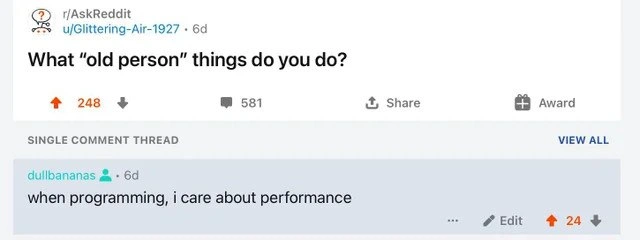
Level 1: The App Should Not Crawl
It is funny because the person says caring whether a program runs fast is an “old person” habit. That is like saying only grandparents care if a door opens easily. Everyone likes things that work quickly, but people sometimes forget until the app gets slow and everyone starts complaining.
Level 2: Fast Enough Matters
Performance means how efficiently software uses time and resources. A program can be correct but still frustrating if it is slow, wasteful, or expensive to run. Developers care about things like:
- How long a page takes to load
- How much memory an app uses
- How many database queries a request makes
- How much CPU a background job burns
- How much network data a feature sends
The Reddit answer is funny because it treats caring about these things as old-fashioned. Many beginners hear the phrase premature optimization is the root of all evil, which is often used to mean “do not make code complicated before you know where the real bottleneck is.” That is useful advice. The problem is when people remember only the first half and use it as permission to never measure anything.
A simple example:
// Slow if users is huge and this runs constantly
const activeAdmins = users.filter(user => user.active && user.role === "admin");
This might be perfectly fine for 100 users. It might become painful for 10 million users, especially if it runs repeatedly inside a request path. Performance work is about knowing when the difference matters.
For newer developers, the balanced lesson is not “optimize everything.” It is “make simple choices, measure real behavior, and respect constraints.” Caring about performance does not make someone ancient. It means they have seen what happens when slow code becomes popular.
Level 3: Optimization Gets AARP
The Reddit screenshot asks, What "old person" things do you do? The highlighted reply answers, when programming, i care about performance. The local post message says, I'm feeling old, which is exactly the emotional target: caring about efficiency is framed as something from an older engineering era, like using keyboard shortcuts or remembering that computers are physical objects with limits.
The humor lands because performance has gone through cultural cycles. Older systems forced developers to think about memory, CPU cycles, disk access, network round trips, and algorithmic complexity because the machine would punish them immediately. Modern environments often provide faster hardware, managed runtimes, autoscaling, enormous dependency ecosystems, and cloud platforms that let inefficient software survive long enough to invoice someone.
That does not mean modern developers are careless. It means incentives changed. Shipping features quickly often beats squeezing milliseconds out of code nobody has complained about yet. Teams are told not to prematurely optimize, which is good advice when it means “measure first.” It becomes bad advice when it mutates into “ignore performance until the checkout page takes eight seconds and finance asks why the cloud bill now has its own gravitational field.”
Performance engineering is also harder than the meme makes it sound. Real optimization requires profiling, workload knowledge, careful benchmarks, understanding cache behavior, database access patterns, serialization costs, frontend bundle size, network latency, garbage collection, and the difference between improving the hot path and polishing a function nobody calls. The experienced developer's trauma is that the obvious slow thing is rarely the only slow thing, and sometimes the fastest code is the code you delete after three meetings and one uncomfortable architecture diagram.
The “old person” framing satirizes how the industry sometimes treats fundamentals as nostalgia. Caring about resource management can sound unfashionable next to framework velocity, developer experience, and “just add another instance.” But performance is still user experience. It is accessibility for people on slow devices. It is battery life. It is infrastructure cost. It is reliability under load. It is the difference between a product that feels instant and one that makes users wonder whether their tap counted.


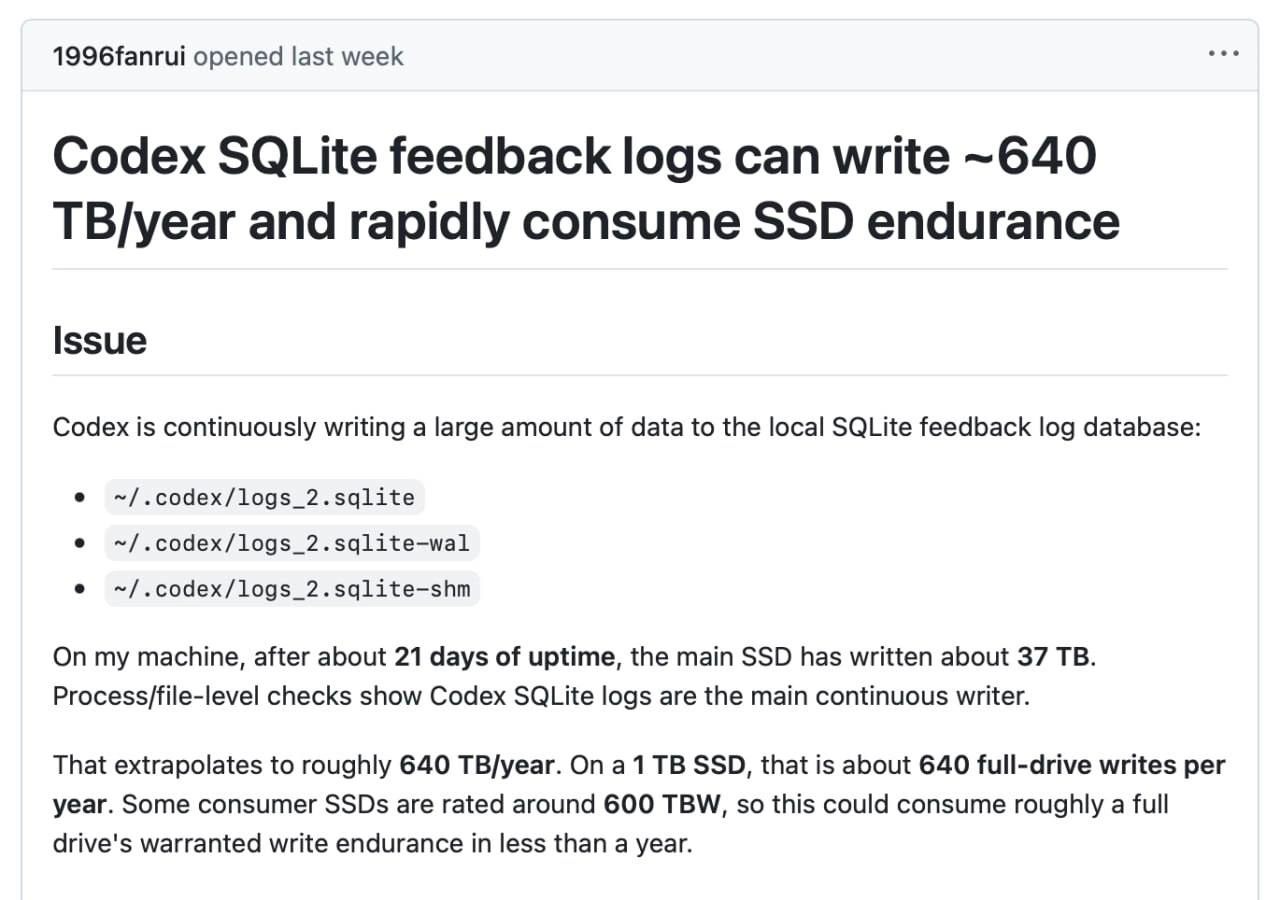
Performance is what you start caring about after the cloud bill becomes your profiler.
Actually the opposite. Performance-first is bad practice. In gamedev especially. I would say I started to write "slow" code just to develop faster
too early optimization =)
No :) When you will get "old" enough you will understand that early optimization is bad. 🙏☺️
I think there's somebody who's 15 in here. Not sure though.
I think I started at age 12 or something with some python. Might've used scratch for a while before that. It really does take a person with no friends for that kind of thing though, so it's not all positive.
trust me, you don't want to be friendless. That was a time in my life I don't want to ever experience again. Even as an introvert, I'd never go back to that kind of life for any amount of skill and/or money.
possibly. As you said, everyone's different. I don't think there's something wrong with you though unless you're uncomfortable or making other people uncomfortable. From your description, that doesn't seem to be the case, so enjoy being weird, but in a good way :)