
Web Scraping DevTools Meme Explained
General Madine-style panels escalate from opening browser DevTools to simply visiting a website, each ending in jail. The deep dive unpacks web scraping, inspect element, corporate double standards, and the gap between how the open web works and how companies want to control their pages.
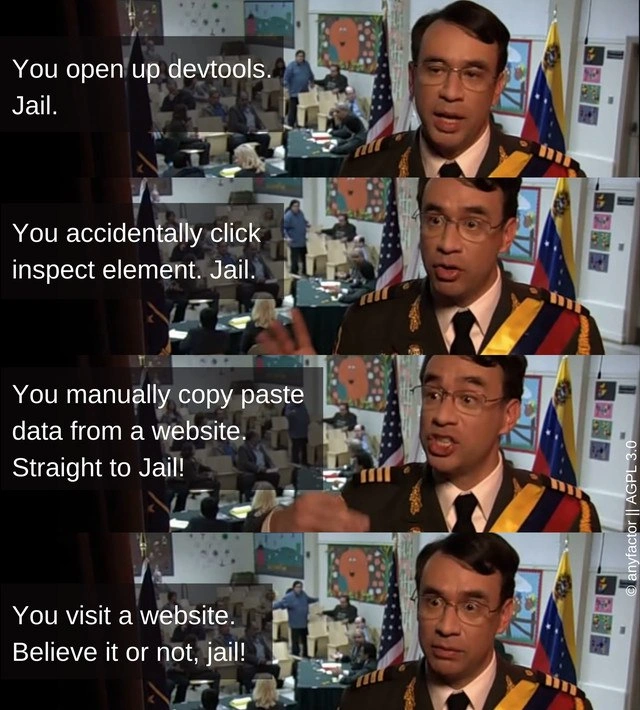
Level 1: Window Shopping Crimes
This is like a store putting items in the front window, then yelling "jail!" when someone looks closely, writes down a price, takes notes, or even walks past the store. The funny part is the overreaction: the website is visible to everyone, but the company acts like noticing too much is a forbidden superpower.
Level 2: Browser Says What
DevTools are the built-in browser tools developers use to inspect a web page. They let you see the page's HTML structure, CSS styles, JavaScript console, network requests, storage, and performance data. Clicking inspect element is a normal way to understand why a button is misaligned, what class name a component uses, or which request loaded a piece of data.
Web scraping means collecting information from web pages, often with automation. A small example might be a script that checks prices once per day. A large example might be a crawler that gathers millions of pages. That is why the topic gets messy: the same basic technique can support accessibility tools, search, research, competition monitoring, spam, surveillance, or outright abuse depending on what is collected and how.
The meme is funny because each panel treats a more basic action as criminal. Opening DevTools is a developer habit. Accidentally clicking inspect is harmless. Copy-pasting visible text is something normal users do. Visiting a website is the whole reason the website exists. By the final panel, the joke has reached the logical endpoint of excessive control: if interacting with the page is forbidden, why publish it to the web at all?
Level 3: Inspect Element Felony
The meme escalates ordinary browser behavior into absurd punishment:
You open up devtools. Jail.
You accidentally click inspect element. Jail.
You manually copy paste data from a website. Straight to Jail!
You visit a website. Believe it or not, jail!
That works because web scraping sits in the awkward trench between normal browser use, automation, business anxiety, and legal posturing. The browser already downloads HTML, CSS, JavaScript, images, API responses, and tracking scripts to the user's machine. BrowserDevTools simply exposes what the site sent. Yet the joke captures how some large companies talk as if looking at page structure, copying visible data, or automating access is inherently suspicious. Apparently the crime is reading the bytes too consciously.
The post caption, "Megacorps when it comes to web scraping," points at the real target: companies that benefit from collecting, indexing, analyzing, and monetizing data at massive scale, then become extremely principled when someone else automates access to their pages. The hypocrisy is not that every scrape is harmless. Scraping can overload servers, violate privacy expectations, bypass product limits, or vacuum up personal information. The satire is that the boundary often gets drawn less around user safety and more around who owns the revenue stream.
Technically, this is where WebSecurity and SecurityTheater get tangled. Legitimate defenses include rate limiting, authentication, abuse detection, anti-fraud systems, and robots policies. But when a public page ships data to any visitor, treating inspect element like contraband reveals a mismatch between the web's architecture and corporate control fantasies. HTTP was not designed as "please look, but only with your eyes and only in ways our monetization department finds flattering."
Experienced developers recognize the pattern: a company exposes a JSON blob in the page, hydrates a client-side app from it, lets search engines index the same content, and then acts shocked when someone writes a script to read it. Then the real engineering begins: bot detection rules, rotating fingerprints, CAPTCHAs, legal threats, proxy arms races, brittle selectors, and meetings where everyone pretends the word "authorization" is simpler than it is.

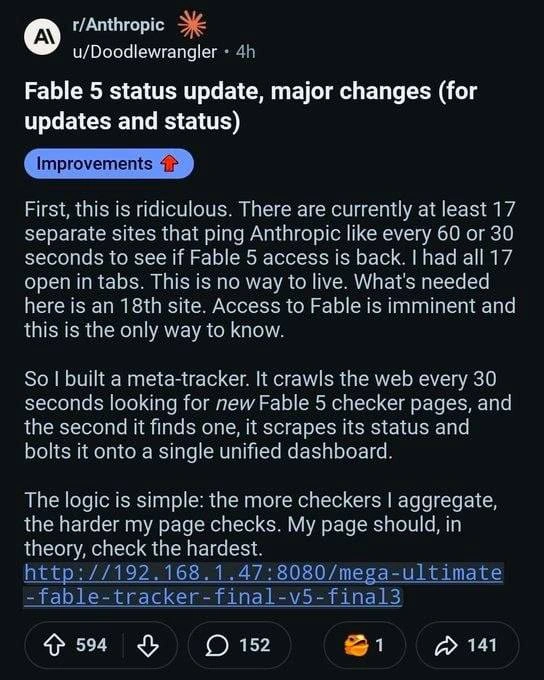

The page shipped 8 MB of public JSON to my browser, but apparently reading it with the wrong tab open is the exploit.
Oh and don't you dare block a single JavaScript request
Though a few weeks ago I needed to scrape some stuff and Apify was quite nice Stuff like residential proxies and auto-throttled request queues to avoid blocking with minimal setup
Explanations team please! Some new totalitarian law on infosec researchers? 🤔