
Kubernetes Cluster Complexity Meme Explained
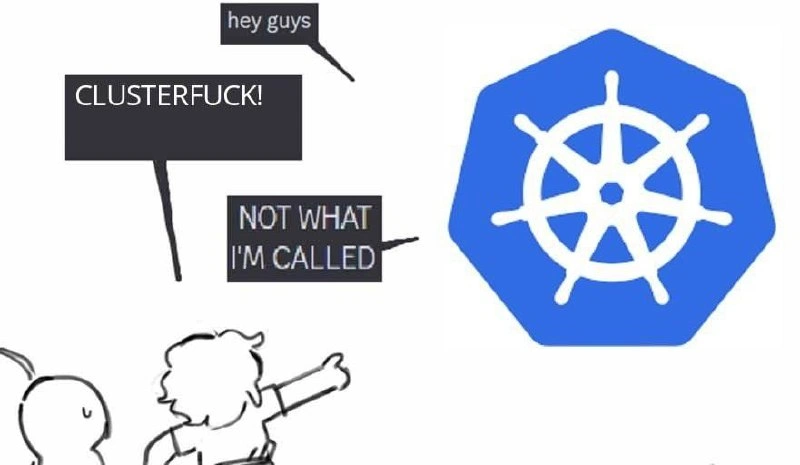
The Kubernetes logo says “hey guys”; a kid yells a rude cluster pun; the logo replies it is not what it is called. The dive explains K8s as a self-healing control plane whose generality creates pods, YAML, and 2 AM pages that earned the nickname.
Level 1: The Nickname That Stuck
A friendly mascot waves and says "hey guys!" — and a little kid yells back a rude nickname instead of its real name. The mascot, clearly used to this, sighs: "not what I'm called." It's the playground dynamic where the polite name on the birth certificate never stands a chance against the nickname everyone actually uses — because the nickname, rude as it is, describes how it feels to deal with them. The laugh comes from the mascot's tired face: it knows the kid is technically wrong and emotionally right.
Level 2: Why "Cluster" Invites the Suffix
- Kubernetes (K8s) — an open-source container orchestrator: you declare what should run ("3 copies of this container, with this much memory"), and it continuously makes reality match. The "8" replaces eight letters, because even the name needed compressing.
- Cluster — the group of machines (nodes) Kubernetes manages as one pool. Your app doesn't live on "a server" anymore; it lives "somewhere in the cluster," which is great until you need to find it.
- The helm logo — a ship's steering wheel; the ecosystem leans hard on nautical Greek (the package manager is literally called
Helm). - Why the reputation? The first time you deploy, you write ~200 lines of YAML to serve one web page. The first time something breaks, the error is three abstraction layers away from the cause.
kubectl describe podbecomes a personality trait.
The junior rite of passage referenced here: discovering that "it works in Docker" and "it works in Kubernetes" are separated by a week of indentation errors, RBAC denials, and one DNS issue (it's always DNS, even in the cluster).
Level 3: The Helmsman Steers Into the Rocks
The comic format here — the "hey guys / [wrong name]!" template where a beloved character is greeted with an insultingly wrong name — is doing precision work. The big blue heptagonal Kubernetes logo, white ship's-wheel and all, waves with a friendly "hey guys." A sketched kid points and screams the name the industry actually uses:
CLUSTERFUCK!
To which the logo replies, with the weary flatness of something that has heard this many times: "NOT WHAT I'M CALLED."
The pun is almost too easy — Kubernetes organizes machines into a cluster, English supplies the rest — but its staying power comes from how earned it is. Kubernetes won the orchestration wars (rest in peace, Docker Swarm and Mesos) by being the most general solution: a declarative, self-healing control plane that reconciles desired state with actual state. The cost of that generality is a combinatorial surface area that no single human fully holds in their head: pods, deployments, services, ingresses, CRDs, operators, admission webhooks, sidecars, taints, tolerations, and a YAML supply chain (Helm templating YAML that generates YAML) thick enough to have its own weather.
The meme's deeper truth is about the gap between a technology's self-image and its operational reputation. Kubernetes' branding is nautical serenity — the name is Greek for helmsman, the logo a calm hand on the wheel. Its lived reality is the 2 AM page where a node went NotReady, the cascade of evicted pods, the CrashLoopBackOff that turns out to be a missing ConfigMap key, and the postmortem line "the cluster did exactly what we told it to, which was not what we meant." The kid in the comic isn't wrong; he's just using the de facto name instead of the de jure one. Every sufficiently complex system eventually earns a second name from its operators, and that name is never on the logo.
There's also a quiet jab at the industry's complexity ratchet: thousands of three-replica web apps run on a platform designed for Google-scale scheduling problems, because résumé-driven development and CNCF gravity made it the default. When your tooling is sized for problems you don't have, the operational overhead is the product you're running — and the kid's word for it is the technically accurate one.


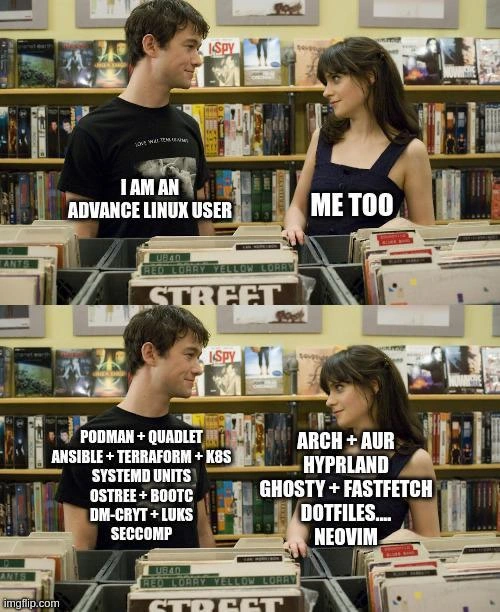
Kubernetes is Greek for 'helmsman'; the kid's translation just accounts for the default configuration
Please use the canonical name: a declaratively managed clusterfuck.
What is that?
Holy shit lol