
Haskell vs Customer KPIs Meme Explained
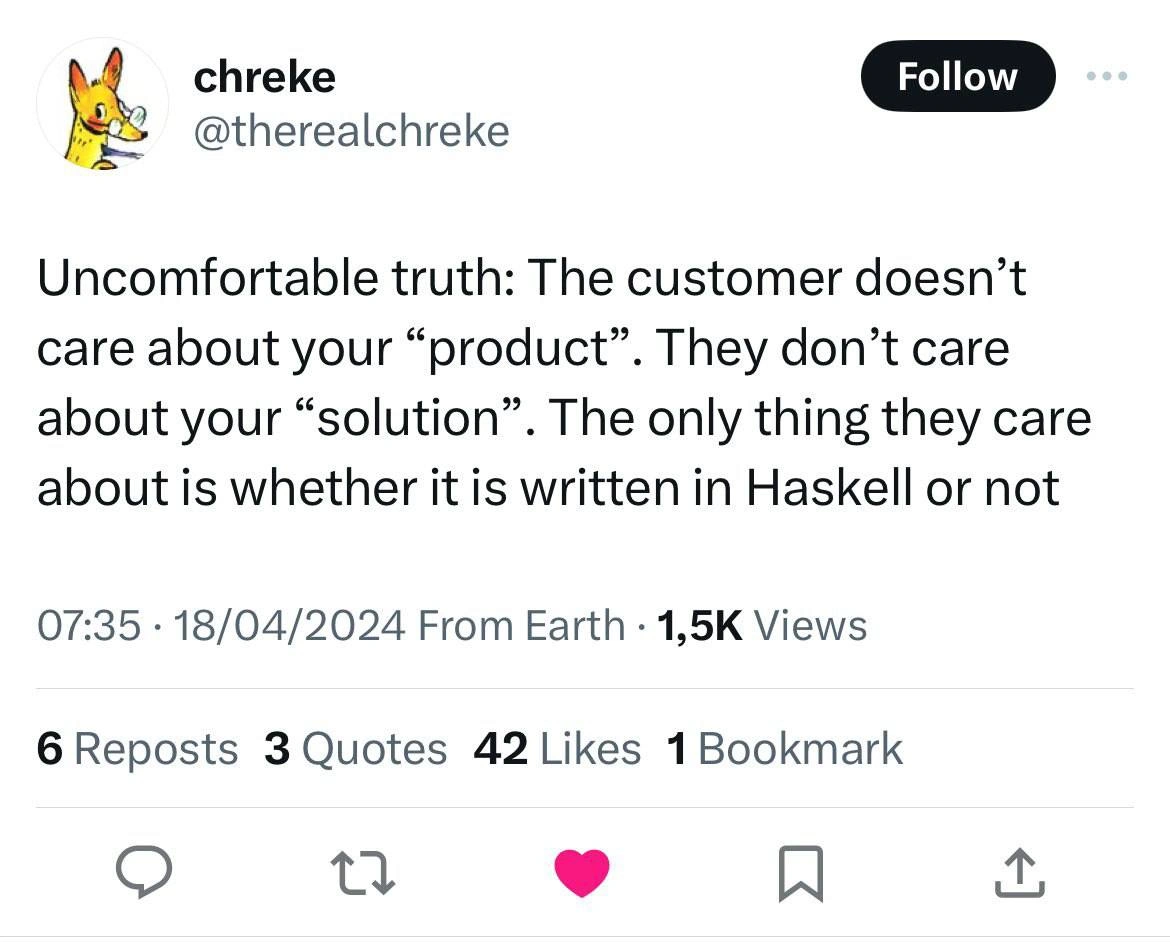
A satirical tweet claims customers only care whether software is written in Haskell. The deep dive unpacks functional programming evangelism, monads versus MVP thinking, and why stakeholders measure products by outcomes—not language purity.
Level 1: Cake Oven Analogy
Imagine you walk into a bakery to buy a cake for your birthday. What do you care about? Probably that the cake is delicious, looks nice, and maybe that it’s the flavor you wanted. Now, would you care what brand of oven the baker used, or whether they mixed the batter with a wooden spoon versus a metal spoon? Likely not at all — those are inside details the baker might get excited about, but as a customer you just want a yummy cake. This meme is joking about the same idea: when people use a software product, they care that it works well and helps them, not what programming language was used to make it. Saying “the only thing they care about is if it’s written in Haskell” is like saying the only thing you care about is that your cake was baked in a super fancy oven. It’s a silly, backwards statement, and that silliness is what makes it funny. The joke is showing how developers sometimes forget that what matters to users is the taste of the cake (the product’s usefulness), not the recipe or tools used to bake it (the coding language).
Level 2: Haskell or Bust
For a less experienced developer or someone new to these jokes, let’s break down why this is funny. Haskell is a programming language, and it’s quite an unusual one in the industry. It falls under the category of functional programming languages. That means, unlike more common languages (like Python, Java, or JavaScript where you often write sequences of instructions with variables that change state), Haskell is all about functions and immutable values. In Haskell, you typically don’t change a variable’s value once it’s set; instead you create new values from old ones with functions. This makes Haskell code very predictable and clean in a mathematical sense. It’s known for features like strong static typing (the compiler checks everything) and pure functions (functions that given the same input will always return the same output and do nothing else). Haskell enthusiasts love it because these features can lead to fewer bugs – if your Haskell code actually compiles, there’s a good chance it’s logically correct, which is a big deal. There’s even a running joke in programming circles about “understanding monads” – monads are a somewhat advanced Haskell concept for handling things like input/output or state without breaking the purity of functions, and they’re notorious for confusing newcomers. So Haskell has this aura of being the “smart” or “elite” language that only the truly dedicated or academic programmers master.
Now, what’s a customer in this context? A customer (or stakeholder/client) is the person or company who uses or pays for the software product. When the tweet says “The customer doesn’t care about your ‘product’ or your ‘solution’,” it’s mimicking a common piece of advice in tech: usually people say customers care about outcomes, not the fancy technical details. They want their problem solved in an easy or cost-effective way. The words product and solution here are in quotes to hint that these are jargon words we use a lot in the industry. A product is what you deliver (an app, a website, a service), and a solution is how it solves a problem. Often tech folks remind each other that customers care about what the product does for them, not how it’s implemented behind the scenes.
Now here’s the punchline: “The only thing they care about is whether it is written in Haskell or not.” This is obvious sarcasm. 😅 In reality, almost no customer even knows what Haskell is, let alone demands that a product be built with it! If anything, outside of very niche circles, a client hearing “We built it in Haskell” might raise an eyebrow and ask “...is that normal? Will it still work?” The tweet is joking that this super arcane detail – the programming language used – is supposedly the customer’s sole concern.
Think about going to use a popular app on your phone: have you ever worried about whether it was coded in C++, Swift, or maybe Haskell? Probably not. You care whether the app is user-friendly and solves your needs. That’s why the tweet is funny: it states the exact opposite of the usual truth for comedic effect. It’s riffing on developer culture: sometimes developers get into language wars, passionately arguing that their favorite language (like Haskell) is the best and that everything should be written in it. This tweet pokes fun at that passion by implying even the end-users have a stake in this war – which they really don’t. It’s highlighting a bit of a reality check: Stakeholder expectations are usually about things like “Does this software make my life easier?” or “Will it help my business?” not “Was this software written in a particular programming language.”
To clarify another term in the meme: “The only KPI”. KPI stands for Key Performance Indicator. This is a fancy business term for metrics that indicate how well something is doing. For a product, typical KPIs might be number of active users, customer satisfaction scores, revenue, response time – things that reflect the product’s success or quality. By joking that the only KPI is whether the product is written in Haskell, the meme is doubling down on the sarcasm. It’s as if a company would measure success purely by “Did we use Haskell? Yes/No.” That’s obviously never a real business metric! Companies care about performance and results, not the syntax of the code. This exaggeration makes it clear that the tweet is mocking the idea of being overly obsessed with internal tech choices.
In summary, this meme uses a Twitter screenshot format (a common way to share jokes or hot takes in the developer community) to deliver a piece of developer humor. It takes a common sensible statement (“customers care about what the product does, not how it’s built”) and twists it into a ridiculous statement (“customers only care if it’s built in Haskell”). The contrast is what triggers the laughter: anyone who knows about Haskell’s almost cult-like fanbase and how irrelevant that is to most clients will get the joke. It’s a lighthearted reminder not to lose perspective. After all, you could write the most elegant application in Haskell, but if it doesn’t do what the user needs, no amount of fancy code will save it.
| Developer’s Wish (Joke) | Customer’s Reality |
|---|---|
| Product must be built in Haskell! | Product must solve my problem! |
| Obsess over programming language | Focus on features and usability |
| Use cutting-edge tech stack | Reliable service with good support |
Level 3: Monads over MVP
On a senior engineering level, this meme lampoons the misalignment that often occurs between developer priorities and business priorities. It parodies those inspirational tech posts that usually go: “Users don’t care how it’s built, they care that it solves their problem.” Here, the tweet flips that script for comedic effect:
“The only thing they care about is whether it is written in Haskell or not.”
This absurd statement immediately signals satire. Why Haskell? Because Haskell is famously a pure functional language that a subset of developers absolutely adore (often with near-religious fervor). It’s a byword for code purity and brilliance in some circles. The meme exaggerates a scenario of functional programming evangelism gone wild – suggesting that a customer would be so enlightened that they ask, “But wait, is your solution written in Haskell? Because that’s all that matters to me!” 😄
In reality, of course, most customers and non-technical stakeholders couldn’t care less about whether your back-end is in Haskell, Java, Ruby, or a bunch of trained hamsters on exercise wheels. They care about an intuitive product that solves their problem (the “solution”), delivered on time, with good performance and reliability. The phrase “the only KPI” being the usage of Haskell pokes fun at how developers sometimes act as if the tech stack is the ultimate measure of success. It’s referencing an in-joke among developers about LanguageWars — those heated debates and strong opinions on choosing the “best” programming language. Seasoned devs have all seen it: one engineer swears by Haskell’s elegance, another insists everything should be in Rust for safety, another claims JavaScript conquers all because it’s everywhere. These debates can feel like zealotry, detached from what end-users actually experience.
The tweet’s format (“Uncomfortable truth: ...”) is itself a spoof of tech thought-leadership posts. Normally, that format ends with something pragmatic like “...they only care that the product solves their problem.” By ending with Haskell instead, the meme is implicitly ridiculing how some developers prioritize tech choices over user needs. It’s a reflection of real scenarios: for example, imagine a team meeting where a developer excitedly proposes a complete rewrite of the product in Haskell to eliminate bugs and improve maintainability. A senior engineer or manager will likely respond, “That’s neat, but how does that help us deliver the features our customers are asking for by Q4?” In practice, rewriting an entire product in a niche language could introduce risk, delays, and hiring challenges – things no customer or business sponsor wants. The humor resonates with experienced engineers because it’s relatable humor: we’ve all seen the disconnect where engineers care deeply about an internal detail (like code style, frameworks, or languages) that users would never even know about.
By invoking Haskell specifically, the meme also nods to the stereotype of Haskell enthusiasts who often tout its superiority. There’s a long-running joke in tech: “You don’t truly understand monads until you’ve tried to rewrite your to-do list app in Haskell.” Here we have “monads over MVP” – prioritizing a complex Haskell concept (monads) over the Minimum Viable Product (MVP) that delivers customer value. In a senior engineering context, the meme is a gentle jab at ourselves as developers. It reminds us that at the end of the day, delivering a working product that users love is the goal, and all our internal choices (while important for maintainability and happiness of the dev team) are not what the user is cheering for. It’s a comedic way of saying “Don’t lose sight of the forest for the trees” – or in tech terms, don’t let a language war distract from the real stakeholder expectations. After all, if a feature is late or the app is buggy, no customer will be mollified by “...but hey, at least we wrote it in Haskell!”
Level 4: Type Theory vs KPIs
At the most theoretical level, this meme highlights a clash between mathematical code purity and business metrics. Haskell is a programming language rooted in academic foundations like the lambda calculus and category theory. In Haskell, functions are pure (no side effects), and the type system is so strong that many bugs are caught at compile time. In fact, there's the Curry-Howard correspondence which cheekily equates “a program with a proof” – meaning a Haskell program can be viewed as a proof that certain logical conditions hold. Advanced concepts like monads (from category theory) allow Haskell to handle input/output and state changes in a controlled way, preserving that mathematical elegance. All this makes Haskell beloved by those who value formal correctness and elegant design; it’s the poster child of functional_programming_evangelism for writing provably correct, maintainable code.
On the other hand, KPI stands for Key Performance Indicator – a measurable value that indicates how well a product or business is doing (think user sign-ups, revenue, latency, etc.). In a real company, no KPI is about the programming language used; KPIs track user behavior and business outcomes, not the internal tech stack. The humor here is almost esoteric: it imagines a universe where “written in Haskell” is literally the only success metric that matters. It’s a tongue-in-cheek jab at the idea that choosing the “right” language will guarantee product success. From a theoretical perspective, writing your whole system in Haskell might maximize certain formal qualities (like correctness and reliability – there’s even research on using Haskell for mission-critical software). But even the most beautiful, mathematically sound Haskell program means nothing if it doesn’t attract users or solve the intended problem. The meme exaggerates this disconnect: as if the purity of your lambda expressions or the elegance of your monadic composition would directly show up on a business dashboard. It’s funny because it contrasts the lofty ideals of type theory with the pragmatic reality of KPIs – a gap every seasoned engineer understands. In short, it’s highlighting that no matter how technically perfect your code is (even if it’s a work of category-theoretic art in Haskell), the outside world judges your product by practical impacts, not by the languages or paradigms you used.

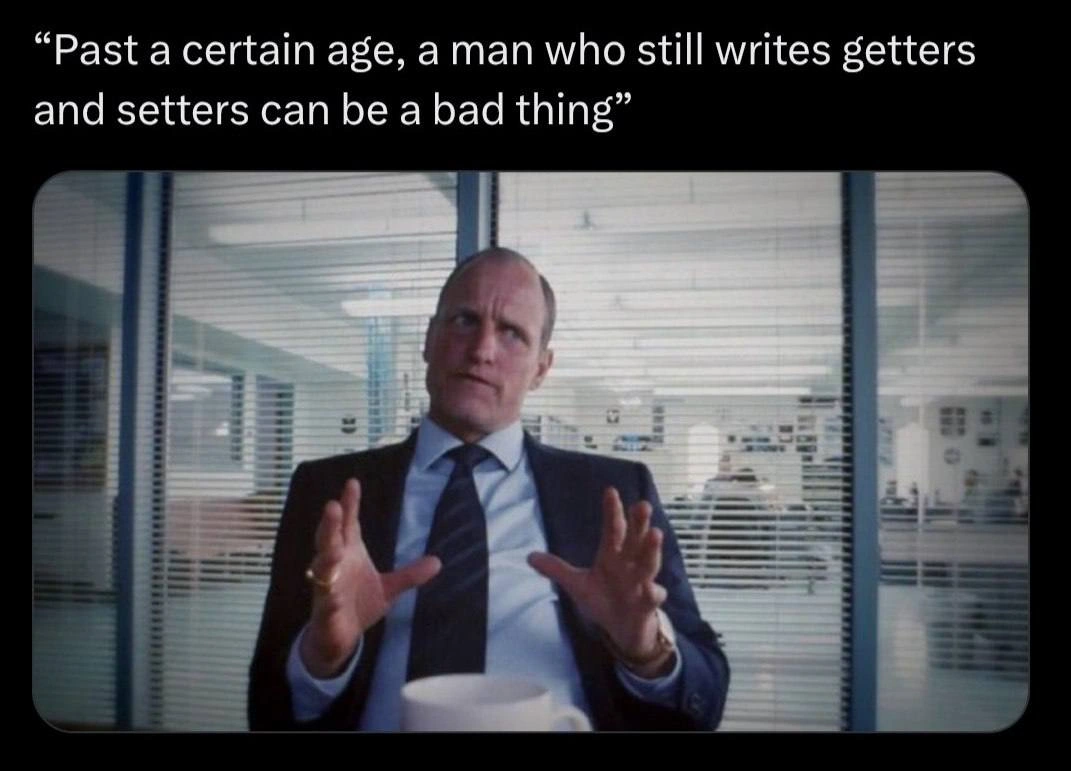
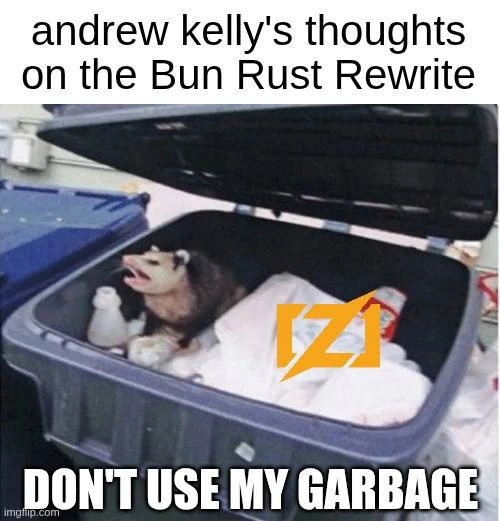
Of course the customer cares if it's written in Haskell. How else would they know to file a bug report titled 'Unexpected lazy evaluation caused the heat death of the universe'?
Enterprise sales funnel these days: Lead → Demo → Realise it’s written in Haskell → Closed-Won - because nothing screams “low risk” like a monad stack with fourteen type parameters
After 20 years of explaining monads to stakeholders, I've finally realized the real monad was the friends we confused along the way - and they still just want their CSV exports to work
This perfectly captures the eternal struggle between engineers who want to rewrite everything in their favorite pure functional language and stakeholders who just want the damn feature shipped. Spoiler: The customer actually cares whether it works, scales, and doesn't bankrupt them in cloud costs - but sure, let's have another 3-hour architectural debate about monads and type safety while the competitor ships in Python
Enterprise RFP: “Must be scalable, secure, and written in Haskell” - translation: we’ll trade ROI for IO, but only if it typechecks
Pitch: “Haskell gives you compile-time guarantees.” Client: “Great - can you also give us compile-time candidates?”
Haskell: Where customers demand purity until their monadic business logic hits production impurity
Uncomfortable truth: The customer doesn't care about your "product". They don't care about your "solution". The only thing they care about is whether it is written using microservices or not 🥺
Thia is so λx.λy.x
At least not in Rust
They're obviously very different languages, but Rust took a lot of inspiration from Haskell for the functional aspects of the language.
+ diversity, inclusivity and equality
Damn, I love to create holy war in the chat 🍿😎
Ah, right, with the advanced pattern matching.
I dont actually play around with that much.
You could probably simplify it more by using matches!() instead of a match. But I'm not certain how exactly you'd convert that.
Though the Rust discord points out that in most cases if you end up with a collection of Results you probably made a poor decision about program structure earlier in your code.
You could make it a lot cleaner too depending on how much flexibility you have for your predicate.
If the predicate accepted a result or an iterator instead of a single value then you could probably just do iter.find(predicate)
iterator is probably the way I'd go.