
Emacs vs Vi Meme Explained
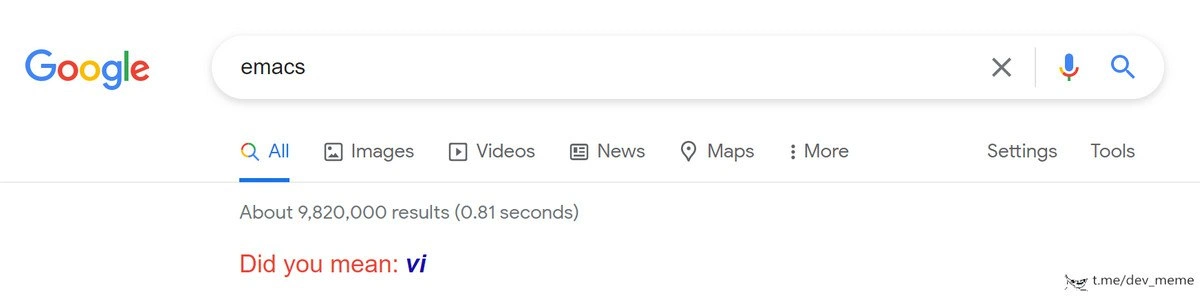
The screenshot shows a search for emacs with Google suggesting vi, as if the rival editor is the correct spelling. The deep dive explains modal vi, extensible Emacs, and why developer editor wars still land as identity jokes.
Level 1: The Computer Picks Sides
This is like asking a teacher for chocolate ice cream and the teacher saying, "Did you mean vanilla?" The funny part is not the ice cream. It is that the teacher acts like your favorite flavor is a mistake. Here, a programmer searches for one code-writing tool, and Google seems to correct them to the rival tool, as if the computer has joined a very old argument.
Level 2: Editor War Autocomplete
Emacs and vi are classic programmer text editors. A text editor is the tool developers use to write code, configuration files, shell scripts, commit messages, and occasionally long defensive essays about why their editor is obviously correct.
The important difference is how they feel:
- vi uses modes. In one mode you type text; in another mode your keys become commands for moving around, deleting, copying, saving, and quitting.
- Emacs is famously customizable. Developers can extend it with packages, write behavior in Emacs Lisp, and shape it into a highly personal programming environment.
- Editor wars are arguments where developers treat tool preference like a moral position.
The Google interface matters because users trust search correction to fix mistakes. When it says Did you mean: vi, the meme pretends that searching for emacs is a spelling error. For a junior developer, this is like discovering that even autocomplete has joined the argument before you have learned how to exit either editor.
The small t.me/dev_meme watermark at the bottom right shows this is being presented as a community joke, not a serious Google product claim. The humor is not that vi is objectively better; the humor is that the suggestion acts as if the debate has already been settled by an algorithm with no patience for your .emacs.d directory.
Level 3: Modal Correction
The screenshot is funny because it turns Google Search into an opinionated participant in the oldest developer flame war still capable of ruining lunch: Emacs versus vi. The visible query is:
emacs
and Google appears to answer with:
Did you mean: vi
That tiny red correction carries a ridiculous amount of cultural baggage. vi and Emacs are not just text editors; they are identity markers from Unix culture. vi represents modal editing, terse commands, ubiquity on servers, and the smug comfort of knowing that :wq will eventually save you from a terminal you cannot escape. Emacs represents extensibility, Lisp-powered customization, packages upon packages, and the running joke that it is less a text editor than an operating system waiting for a decent editor.
The joke works because spell correction is supposed to be neutral. Google suggesting vi for emacs would imply that Emacs is not merely a different tool, but an error to be corrected. That is exactly how editor-war partisans talk when they stop pretending to be adults. It compresses decades of text editor choice, developer tribalism, and community tropes into one fake-looking search suggestion that feels just plausible enough to sting.
There is also a nice power dynamic here. Developers argue endlessly about editors, but the screenshot gives the final word to a search engine. The machine does not debate keybindings, package ecosystems, terminal availability, or whether modal editing rewires your brain for the better. It simply marks one side as a typo. Somewhere, a mailing list archive just sighed.

The editor war finally ended when autocomplete achieved sentience and chose modal editing.
Pog
Script kiddies using "Inspect element"
What is that mean?
https://t.me/sendmegifs/310
.
Worked for me, East US
https://www.google.com/search?q=vi&hl=en https://www.google.com/search?q=emacs&hl=en
Notice the hl=en